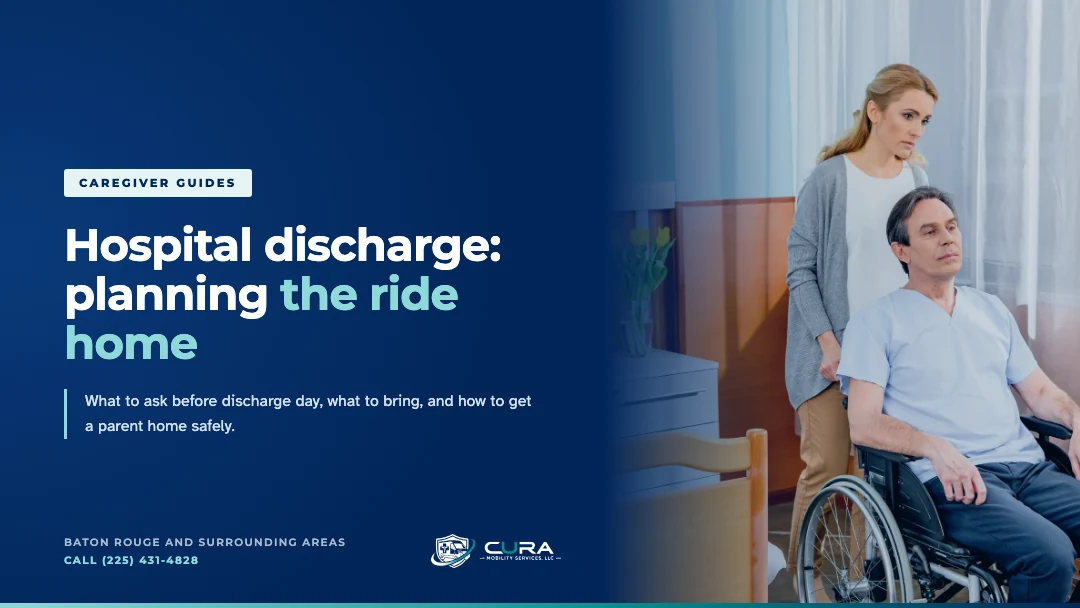
Planning the ride home from the hospital after discharge
Plan the ride home before discharge day. Ask the care team for the expected discharge time, then book a ride that can wait for the paperwork. Bring clothes, shoes and any walker or wheelchair. After anesthesia or sedation, your parent should not drive or go home alone, so plan for a driver and someone to stay nearby.
TLDR:
Ask about the discharge time and plan the ride a day ahead. Discharge often runs later than expected.
After anesthesia or sedation, your parent cannot drive or get home on their own.
Bring comfortable clothes, flat shoes and any walker or wheelchair the care team orders.
Pick up new prescriptions on the way home so there are no extra trips later.
Someone should stay nearby for the first day, and the follow-up visit should be booked before you leave.
Discharge day rarely runs on schedule. The doctor signs off in the morning, the pharmacy fills orders at noon and the nurse reviews the papers mid-afternoon. For Baton Rouge families juggling work and a parent’s hospital stay, the ride home can easily become an afterthought. A little planning keeps it from becoming the most stressful part of the day.
Is your parent coming home soon? Tell us the hospital and the expected discharge time. We will call to confirm the pickup, any mobility needs and a clear price before anything is booked.
Medicare’s own discharge planning checklist asks patients if they are ready for tasks like getting to doctors’ appointments and picking up prescription drugs. Rides are part of the plan, not an extra.
A simple order for discharge day. Your parent’s care team may adjust it.
The day before discharge: questions to ask
Most discharge surprises come from questions nobody asked. Catch the care team or case manager a day early if you can.
Ask these questions:
What time is discharge likely? Ask for a window, and ask what could push it later.
Will your parent need equipment? The Medicare checklist tells patients to ask if they will need medical equipment, like a walker, and who will arrange it.
Which prescriptions are new or changed? Ask if they can be filled before discharge or sent to a nearby pharmacy.
Are there activity limits? Stairs, lifting and bathing rules change how you plan the first night.
When is the follow-up visit? Get the date, or the number to call to set it.
Then book the ride. Tell the ride service the hospital, the unit, your parent’s mobility needs and that the pickup time may shift. A ride that can adjust by phone saves a long wait in the lobby.
Discharge morning: what to bring
Your parent came in wearing whatever they had on. They probably need something easier for the trip home.
Pack a small bag with loose, comfortable clothes, flat shoes with a good grip and a light jacket or blanket for the car. Add glasses, hearing aids, a phone charger and the house keys.
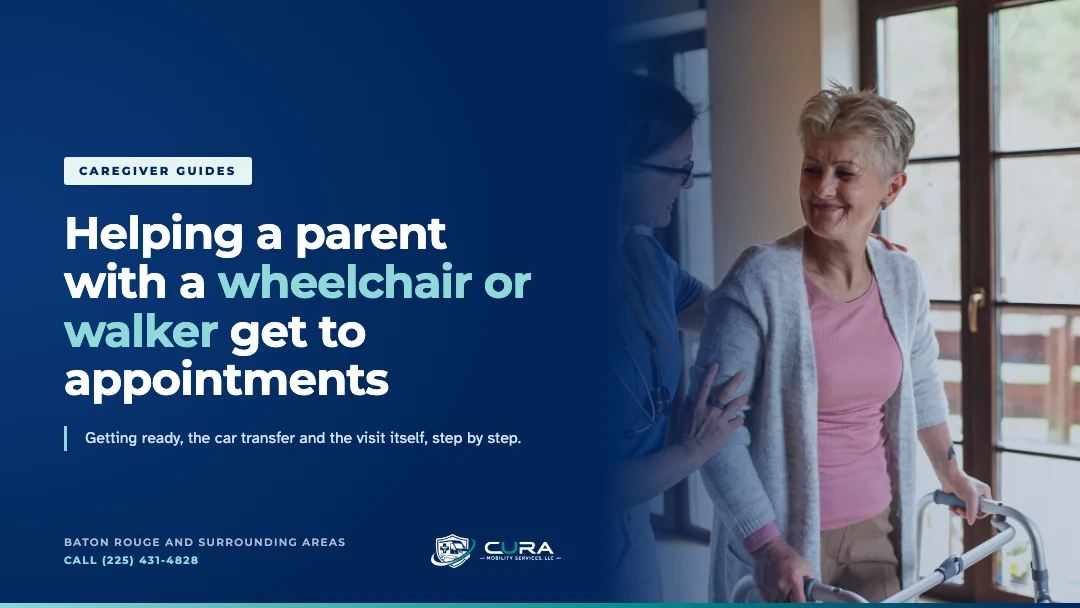
If the care team ordered a walker or wheelchair, make sure it goes home with your parent. Our guide to helping a parent with a walker or wheelchair walks through the car transfer step by step. The CMS checklist also suggests writing down the name and phone number of the caregiver who will help after discharge. Put that note in the bag with the discharge papers.
The ride home: keep it short and steady
The goal for the trip is simple: home, settled and resting, with as few stops as possible.
The CMS checklist advises getting prescriptions and diet instructions early, so there are no extra trips after discharge. If the hospital pharmacy cannot fill them, plan one pharmacy stop on the way. Our hospital discharge rides can include that stop, with help from the room to the car and into the house.
Want one less thing to manage on discharge day? We help from the hospital room to the car and into the house, and the pharmacy stop can be part of the trip.
Getting home is the goal, but the first night matters just as much. Plan it before you leave the hospital.
Have someone stay with your parent, or check in often, for at least the first day. Clear a path from the door to the bed and bathroom, and move rugs and cords out of the way.
Sort the medicines right away. Compare the discharge list with the bottles at home and set aside anything the care team stopped. Write down questions for the follow-up visit as they come up.
Book the ride to that follow-up visit now, while the date is fresh. If your parent needs several visits, such as physical therapy or wound care, recurring rides can cover them on a set schedule. For the bigger picture of rides for a parent who no longer drives, see our caregiver’s guide to medical rides.
What families ask about the ride home from the hospital
These are the questions we hear most from families planning a parent’s discharge.
Can my parent take a taxi or rideshare home after surgery?
Not alone. The American Society of Anesthesiologists says patients who had anesthesia or sedation cannot drive or get home on their own. Ask the surgery center about its release rules ahead of time. Then plan for a family member to drive, or a door-to-door ride with someone meeting your parent at home.
What if the discharge time changes?
Discharge times often slip while the team finishes orders, paperwork and prescriptions. Tell the ride service the pickup may move, and ask how they handle changes. Keep the unit’s phone number handy, and ask the nurse to call you when the papers are nearly ready so the ride can be timed well.
Does Medicaid cover a ride home from the hospital in Louisiana?
It can. Healthy Louisiana plans offer rides for members, and one plan, Louisiana Healthcare Connections, says it can pick up members from the hospital or ER once a discharge order is issued. Rules and phone numbers differ by plan, so call your parent’s plan before discharge day to set it up.
What should my parent wear home from the hospital?
Loose, easy clothes that go on without much bending or reaching. A front-button shirt or zip jacket, soft pants with an elastic waist and flat, closed shoes with a good grip all work well. Bring a light blanket for the car, since hospital gowns and air conditioning leave many people chilled.
Should someone stay with my parent the first night?
In most cases, yes, especially after surgery, sedation or a long stay. Ask the care team what they recommend for your parent. Even if your parent seems steady, having someone close by for the first day helps with medicines, meals and getting to the bathroom safely.
Plan the ride home now, not on discharge day. Call with the hospital and the expected discharge time, or request a quote online. We will confirm the details and a clear price before anything is booked.
A walker or wheelchair turns a quick doctor visit into a real outing. Here is how to get a parent ready, handle the car transfer safely, get through the appointment…